
English| EUR
Suggested for you
More currencies
Choose a language
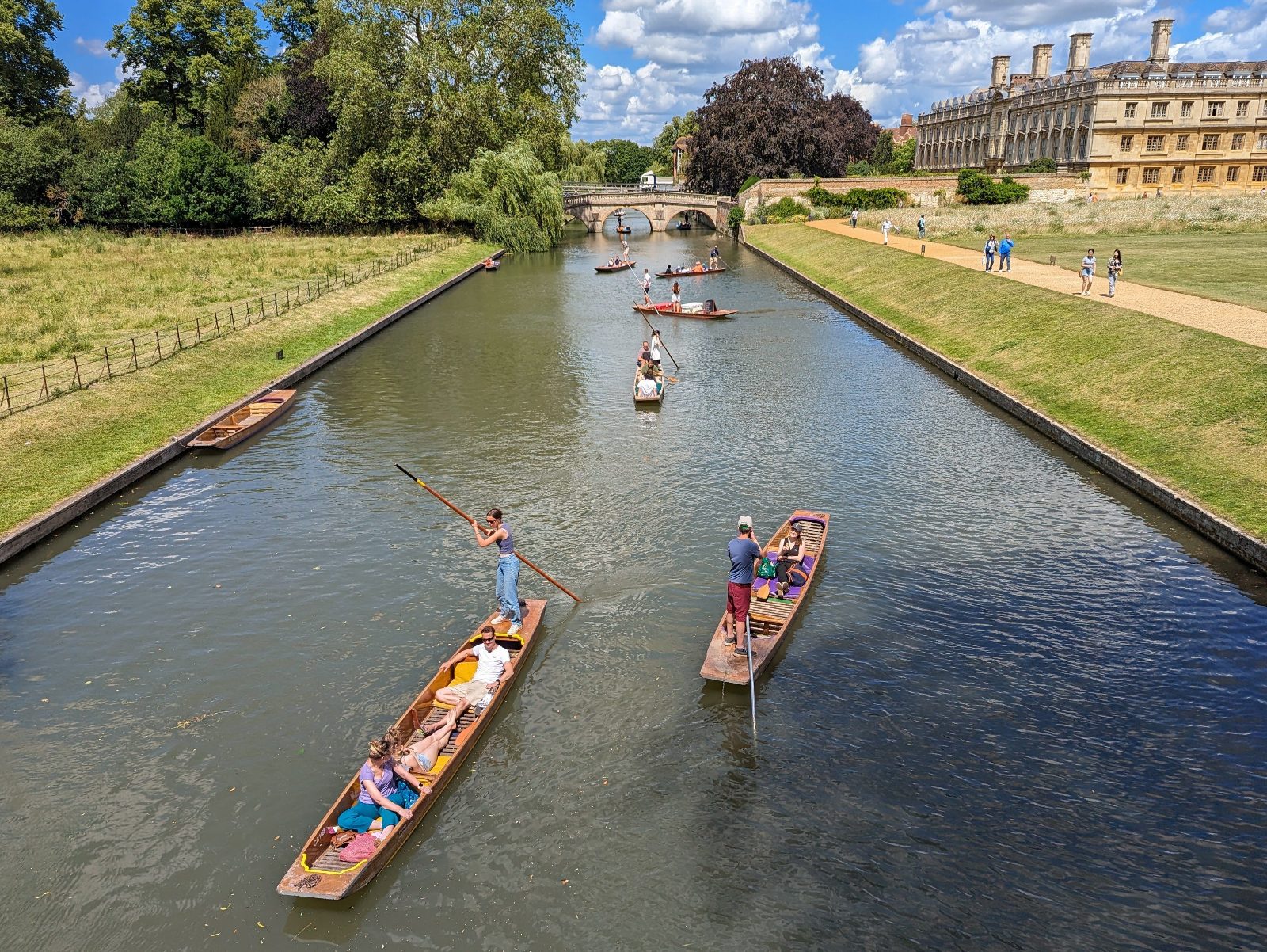
Every traditional punt on the River Cam operates under strict capacity and weight guidelines to ensure stability and passenger safety. Whether you're booking a shared chauffeured tour or considering a self-hire adventure, understanding these limits shapes how you plan your group size and what to expect on the water.
Quick answer
Most Cambridge punts accommodate a maximum of 12 passengers, with operators enforcing a combined weight limit of approximately 1,000 kilograms (around 2,200 pounds) to maintain stability and comply with safety regulations. Shared chauffeured tours typically seat 10-12 guests per boat, while self-hire punts often have slightly lower recommended capacities to account for the balance required when standing to pole. Weight distribution matters as much as total load—operators assess group composition and may adjust passenger counts accordingly.
The River Cam flows through Cambridge at a gentle pace, but the traditional flat-bottomed punt was never designed for excess. The cambridge punting weight limit exists because these wooden vessels rely on precise balance rather than deep hulls for stability. A punt sits low in the water by design, and overloading shifts the waterline dangerously close to the gunwales, especially when passengers move or the chauffeur shifts position to navigate the tight arches beneath Clare Bridge and the Bridge of Sighs. Operators assess capacity on two axes: raw passenger count and distributed load. A group of twelve adults will be seated strategically—heavier passengers toward the centre, lighter guests near the bow or stern—so the boat maintains an even keel. Self-hire punts carry a more conservative threshold because novice polers struggle with balance, and a sudden lean while pushing off the riverbed can destabilize a fully loaded boat. Chauffeured tours benefit from the guide's skill in weight management, allowing operators to approach the upper capacity threshold more confidently. Weight restrictions also reflect the physical reality of the Cam's shallow stretches. During dry summer months, sections near the Mill Pond drop to less than a metre in depth, and a heavily laden punt will scrape gravel or become temporarily grounded. The chauffeur's pole—a five-metre wooden shaft pushed against the riverbed—generates enough force to propel the boat forward, but only if the load remains within the designed tolerance. Exceeding the limit doesn't just risk passenger safety; it damages the punt's hull and disrupts the delicate ecology of the riverbed. When booking, expect operators to ask for group size and, occasionally, approximate weight distribution if your party includes young children or a mix of adults. This isn't bureaucracy—it's the same practical calculus that punting companies have applied for over a century. The River Cam's shallow draft and the punt's elegant simplicity leave no margin for guesswork, and the cambridge punting weight limit guide ensures that every tour departs with the stability and safety margin the waterway demands.
“A punt sits low in the water by design, and overloading shifts the waterline dangerously close to the gunwales.”
Understanding the Cambridge Punting Weight Limit for Shared Tours
Shared punting vessels typically accommodate up to six passengers to ensure stability and maneuverability on the River Cam.
Weight distribution across the punt is critical for the chauffeur to maintain control and keep the vessel level.
There is no strict individual weight limit for passengers, provided the collective weight of all occupants stays within safety parameters.
Operators monitor total passenger load to comply with safety guidelines and maintain appropriate freeboard, which is the distance from the waterline to the boat deck.
Punt chauffeurs retain the authority to manage seating arrangements or limit passenger numbers if they determine that current weight distribution compromises stability.
On shared tours, passengers are seated according to the chauffeur's guidance to balance the boat effectively before departing from the landing stage.
Punts are narrow, flat-bottomed boats that rely on balanced weight distribution to remain stable. Sudden movements or leaning can tip the boat, so staying seated and following your chauffeur's instructions keeps everyone safe and dry.
Punting services operate daily throughout the week with consistent hours to accommodate visitors. You may access the river from early morning until the evening hours.
To ensure a comfortable experience on the river, the best arrival window is 09:00–11:00. This timeframe allows visitors to avoid mid-day crowds while securing cooler morning temperatures.
—
Quiet river conditions provide the most relaxed atmosphere for navigation.
Mild temperatures averaging 15°C
University terms are in session, offering vibrant scenery without peak summer density.
Warm weather averaging 22°C
River traffic is significant; early arrival is essential to manage weight limits and stability.
Cooler temperatures averaging 14°C
Waterways become significantly quieter as the peak tourist season concludes.
Verdict: The best time to visit is Tuesday to Thursday between 09:00–11:00 during April or October.
Everything you need to know about cambridge punting weight limit
While there is no strict individual cambridge punting weight limit, the flat-bottomed vessels have a maximum load capacity for stability. Safety remains the priority for the chauffeur navigating the River Cam. Passengers are generally expected to board in a balanced manner to maintain the boat's equilibrium. Operators assess the total weight distribution to ensure a secure and comfortable trip for everyone on board. Since shared chauffeured tours operate with a set seating capacity, the weight of passengers is managed by these established limits per boat. You do not need to weigh yourself before booking, but please be mindful that excessive combined weight can affect the draft of the punt. These vessels are designed for standard recreational use rather than transporting heavy equipment. It is recommended to travel light as large suitcases or bulky items can clutter the seating area and shift the center of gravity. For the best experience, keep personal items to a minimum when enjoying your river tour. Each boat is rated for a specific number of passengers, which naturally keeps the craft within a safe operational range. Punting boats remain stable when group sizes adhere to these standard capacity guidelines. Private hires follow similar safety protocols regarding total boat load to ensure the vessel remains buoyant and easy to maneuver. Your chauffeur will provide guidance upon arrival at the Quayside to ensure the boat is loaded safely.
Cheapest Punting Tours in Cambridge
Read more GuideDog-Friendly Punting Tours in Cambridge
Read more GuideCambridge Punting Tour Prices & Booking
Read more Tickets & toursCambridge Punting and Walking Tours
Read more GuideHow to Book Punting Tours in Cambridge
Read more Tickets & toursShared Guided Cambridge Punting Tours
Read more GuideCambridge Punting Logistics & FAQs
Read more